Je winkelwagen is momenteel leeg!
Inspiring Tomorrow's Visionaries Today
The Inclusive Imperative
In the tapestry of democratic governance, the threads of representation have historically been woven with a human-centric focus, wherein the voices of non-human entities find themselves marginalized or altogether absent. As we stand at the precipice of a new era marked by environmental challenges and evolving ethical considerations, the imperative to reassess the foundations of democratic representation becomes undeniable. This essay, titled “The Inclusive Imperative: Democratizing Representation for Non-Human Entities in Contemporary Liberalism,” embarks on a journey through the compelling arguments put forth by eminent scholars—Bruno Latour, Jeffrey Masson, Erica Fudge, Tom Regan, Sue Donaldson, Will Kymlicka, Vinciane Despret, Henry Salt, and Melanie Joy—who collectively challenge the historical anthropocentrism embedded in democratic theory.
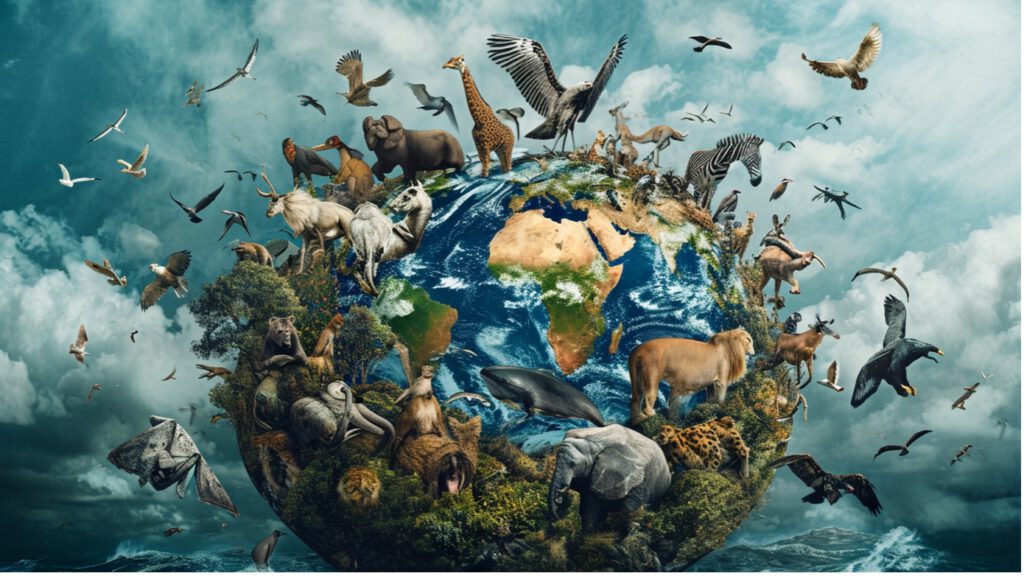
The concept of democratic representation, tracing its roots through the annals of political history, has predominantly focused on the agency and rights of humans. The liberal tradition, with its fundamental values of individual rights, equality, freedom, justice, and the rule of law, has played a pivotal role in shaping contemporary democratic discourse. Yet, the historical development of liberalism, while championing human rights and liberties, has inadvertently marginalized non-human entities, relegating them to the periphery of political consideration.
The need to reevaluate democratic representation in the broader context of non-human entities arises from the realization that our interconnected world demands a more inclusive approach. The consequences of climate change, biodiversity loss, and ethical considerations surrounding animal rights propel us toward a critical reexamination of our political structures. It is within this nexus of evolving challenges and ethical imperatives that the contributions of Latour, Masson, Fudge, Regan, Donaldson, Kymlicka, Despret, Salt, and Joy gain relevance.
Bruno Latour challenges the conventional boundaries of democratic discourse by insisting on an inclusive framework that transcends human-centric limitations. In a world grappling with environmental crises, Latour advocates for recognizing the agency and significance of non-human entities within the democratic fabric.
Jeffrey Masson and Erica Fudge delve into the intricate emotional lives of animals, dismantling the traditional perception that separates human experiences from those of their non-human counterparts. Tom Regan builds upon this foundation, contending that animals possess inherent value and rights, urging a moral obligation to afford them the respect and consideration they deserve.
Sue Donaldson and Will Kymlicka further extend the conversation by proposing the radical idea of extending citizenship to animals, challenging the conventional boundaries of political participation and representation. Their work compels us to reconsider the liberal concept of citizenship in the broader context of species beyond Homo sapiens.
Vinciane Despret and Henry Salt contribute valuable perspectives by shedding light on the ethical imperative of acknowledging non-human entities in democratic processes. Despret urges a nuanced understanding of animal behavior, challenging preconceived notions, while Salt, a pioneer in animal rights advocacy, emphasizes the moral obligation of recognizing the rights of all living beings.
Melanie Joy introduces the concept of carnism, an ideology that normalizes the consumption of certain animals while stigmatizing others, thus presenting ideological challenges within liberal societies that warrant critical examination.
In traversing the collective insights of these scholars, this essay endeavors to illuminate the implications of their ideas on the democratic landscape and liberal values. As we confront the complex interplay between environmental stewardship, ethical responsibility, and democratic governance, the imperative to democratize representation for non-human entities emerges as a profound and timely consideration within the broader context of contemporary liberalism.
Section 1: The Evolution of Liberalism and Its Core Values
Exploring the Historical Foundations of Liberalism:
The roots of liberalism stretch deep into the intellectual soil of the Enlightenment, where thinkers like John Locke, Jean-Jacques Rousseau, and Thomas Hobbes sowed the seeds of a political philosophy that would come to define the modern era. At its inception, liberalism emerged as a response to the authoritarianism and arbitrary rule that characterized pre-modern societies. Its core tenets—individual rights, equality, freedom, justice, and the rule of law—formed the foundation upon which democratic societies were built.
Individual Rights as Pillars of Liberalism:
Central to the liberal tradition is the veneration of individual rights. Enlightenment thinkers contended that individuals possess inherent and inalienable rights, which serve as a bulwark against encroachments by the state or other individuals. These rights include the right to life, liberty, and property, and they crystallize the principle that individuals are the rightful architects of their own destinies. As liberal societies evolved, these rights expanded to encompass broader notions of personal autonomy and self-determination.
Equality as a Driving Force:
Equality, another cornerstone of liberalism, was conceptualized as a counterweight to the entrenched hierarchies and rigid social structures of the past. Liberalism championed the idea that all individuals are equal before the law and entitled to equal opportunities. The pursuit of social and economic equality became a rallying cry, shaping policies and movements aimed at dismantling discriminatory practices and fostering inclusivity.
Freedom as Liberating Ideology:
Liberalism’s commitment to freedom is multifaceted, encompassing both negative freedom (freedom from interference) and positive freedom (freedom to achieve one’s potential). The liberal emphasis on freedom celebrates the autonomy of individuals and promotes a society in which citizens are unshackled by arbitrary constraints. It is within the framework of this liberal freedom that notions of free speech, free markets, and personal liberties have thrived.
Justice and the Rule of Law:
The pursuit of justice within a system governed by the rule of law is another fundamental liberal principle. The rule of law ensures that individuals are subject to impartial legal frameworks, fostering a society where justice is blind and applied equally to all. This commitment to justice underpins liberal democracies, seeking to balance individual freedoms with the collective welfare.
Shaping Contemporary Political and Ethical Discourse:
As liberal values matured over the centuries, they became the touchstone for political and ethical discourse in the contemporary world. Liberalism played a pivotal role in the development of constitutional democracies, human rights movements, and social justice initiatives. It informed the establishment of institutions like the United Nations, designed to safeguard individual rights and promote global cooperation.
However, as liberalism evolved, it also encountered challenges and critiques, particularly in its anthropocentric focus. The exclusivity of liberal principles to human entities has been brought into question, prompting a reevaluation of democratic representation in light of non-human entities. In the subsequent sections, we will delve into the transformative arguments put forth by Bruno Latour, Jeffrey Masson, Erica Fudge, Tom Regan, Sue Donaldson, Will Kymlicka, Vinciane Despret, Henry Salt, and Melanie Joy. These scholars, while acknowledging the significance of liberal values, challenge the historical anthropocentrism inherent in democratic theory and advocate for the representation of non-human entities within contemporary democratic frameworks. Their insights beckon us to reconceptualize the very foundations of liberalism in a world intricately interwoven with the lives and interests of non-human entities.
Section 2: Bruno Latour’s Challenge to Anthropocentrism
Examination of Latour’s Critique:
Bruno Latour, a luminary in science and technology studies, propels us into the heart of the discourse surrounding the anthropocentric foundations of contemporary liberalism. Latour’s critique challenges the historical emphasis on human agency and the marginalization of non-human entities within democratic frameworks. His work, particularly articulated in “Facing Gaia: Eight Lectures on the New Climatic Regime,” calls for a radical reevaluation of how we conceive democracy in the face of ecological crises.
Latour confronts the entrenched anthropocentrism that has historically characterized human thought, arguing that such a perspective obscures the intricate web of interconnections between human and non-human entities. The traditional dichotomy separating nature from culture, Latour contends, is a conceptual limitation that impedes our ability to address global challenges like climate change effectively. In Latour’s view, the exclusivity of human agency in democratic processes is an impediment to crafting holistic solutions that consider the agency and interests of non-human entities.
Call for an Inclusive Democratic Paradigm:
At the core of Latour’s argument lies a profound call for an inclusive democratic paradigm—one that transcends the confines of human-centered politics. His advocacy revolves around recognizing the agency of non-human entities, such as ecosystems, animals, and climate systems, and incorporating them into the democratic decision-making process. This inclusivity, according to Latour, is imperative for crafting policies that acknowledge the interconnectedness of all life forms and effectively address the complex challenges posed by ecological degradation.
Analysis of Alignment with Liberal Values:
Latour’s ideas, while disruptive to traditional modes of thought, align with and challenge various aspects of liberal values. On the one hand, his emphasis on inclusivity resonates with the liberal commitment to equality and justice. By advocating for the representation of non-human entities, Latour seeks to rectify historical injustices perpetuated by anthropocentrism. In doing so, he aligns with the liberal aspiration for a just and equitable society.
On the other hand, Latour’s challenge to anthropocentrism may be perceived as a departure from the liberal focus on individual rights. Traditional liberalism places a paramount importance on the rights of human individuals, often relegating non-human entities to the periphery of moral and political consideration. Latour’s paradigm shift challenges this anthropocentric orientation, prompting a reevaluation of how liberal values might be extended to encompass the interests and rights of all entities.
Latour’s ideas thus present both an alignment with liberal values, such as justice and equality, and a challenge to the traditional anthropocentric underpinnings of liberalism. As we navigate through his intellectual terrain, we are compelled to reflect on the adaptability of liberal principles in accommodating a more inclusive vision of democracy—one that acknowledges and represents the diverse interests and agencies of the entire ecological community. In the broader context of contemporary liberalism, Latour’s challenge to anthropocentrism is a call for ideological evolution, pushing the boundaries of traditional thought to construct a more responsive, inclusive, and sustainable democratic framework.
Section 3: Animal Rights and Ethics: Jeffrey Masson, Erica Fudge, and Tom Regan
Exploration of Animal Emotions:
Jeffrey Masson and Erica Fudge, in their respective works, delve into the intricate emotional lives of animals, dismantling the longstanding belief that such experiences are exclusive to humans. Masson’s groundbreaking book “When Elephants Weep” and Fudge’s explorations in “Animal Bodies, Human Minds: Ape, Dolphin, and Parrot Language Skills” challenge the traditional Cartesian dualism that has relegated animals to the status of unfeeling automata. Their collective exploration underscores the emotional richness and complexity found within the animal kingdom, challenging preconceived notions that have informed political and ethical frameworks.
Masson’s work, rooted in the study of animal behavior and psychology, posits that emotions such as joy, grief, and empathy are not uniquely human attributes but are shared across the spectrum of sentient beings. Fudge, on the other hand, contributes to the discourse by examining the language skills of animals, particularly apes, dolphins, and parrots, revealing cognitive capacities that defy the conventional understanding of animal intelligence.
Regan’s Argument for Inherent Value and Rights:
Building upon the emotional exploration initiated by Masson and Fudge, Tom Regan advances the discourse on animal rights by asserting the inherent value of animals and their entitlement to rights. In his seminal work “The Case for Animal Rights,” Regan contends that animals are not mere commodities or resources for human use but are subjects of life, possessing inherent value irrespective of their utility to humans. Regan’s deontological approach emphasizes the moral obligation to recognize animals as possessors of inherent rights, akin to the rights afforded to human beings.
Regan articulates the concept of the “subject-of-a-life,” arguing that animals, like humans, have inherent interests, desires, and a sense of well-being that ought to be respected. He posits that animals have the right to live free from exploitation, pain, and suffering, and calls for a paradigm shift in the treatment of animals from mere resources to individuals with intrinsic value.
Implications on Liberal Values:
The arguments presented by Masson, Fudge, and Regan have profound implications for liberal values, particularly equality and justice. If, as Masson and Fudge contend, animals experience emotions and possess cognitive capacities akin to humans, then the traditional hierarchical distinction that places humans at the apex of moral consideration becomes ethically untenable within the liberal framework.
Regan’s argument for the inherent value and rights of animals challenges the anthropocentric bias inherent in classical liberal thought. In the liberal tradition, equality and justice are foundational principles, yet they have historically been limited to the sphere of human relations. The ethical imperative arising from the works of Masson, Fudge, and Regan demands a reevaluation of liberal values to encompass non-human entities, recognizing them as deserving subjects of moral consideration.
As we navigate the implications of these arguments within contemporary liberalism, the challenge lies in reconciling the extension of rights and moral consideration to non-human entities with the traditional liberal emphasis on individual rights. The evolving discourse on animal rights and ethics, prompted by the insights of Masson, Fudge, and Regan, forms a critical part of the broader conversation on democratizing representation for non-human entities within contemporary liberal frameworks. This section marks a pivotal exploration into the ethical landscape, urging us to rethink and expand the foundational principles of liberalism to embrace the diverse interests and intrinsic value of all living beings.
Section 4: Citizenship for Animals: Sue Donaldson and Will Kymlicka
Investigation of the Proposal:
Sue Donaldson and Will Kymlicka’s collaborative work, notably presented in their book “Zoopolis: A Political Theory of Animal Rights,” injects a transformative dimension into the discourse on the representation of non-human entities within democratic processes. Their proposal to extend citizenship to animals challenges the traditional boundaries of political participation, urging a reevaluation of the liberal concept of citizenship. By reconceptualizing animals as political beings with diverse needs, capacities, and interests, Donaldson and Kymlicka advocate for an inclusive framework that transcends species boundaries.
The heart of their proposal lies in the acknowledgment that animals are not homogeneous entities but diverse individuals with distinct relationships to human societies. Donaldson and Kymlicka introduce the concept of three categories of animals: domesticated animals, who share a cohabitative relationship with humans; liminal animals, who navigate the borders between human and wild spaces; and wild animals, who exist autonomously in their natural habitats. By recognizing these categories, they lay the groundwork for a more nuanced understanding of animals’ roles within human societies.
Analysis of Ethical and Political Implications:
The proposal to extend citizenship to animals introduces ethical and political implications that resonate within the liberal framework. Ethically, this proposition challenges the traditional moral hierarchy that has historically placed humans at the pinnacle of consideration. By extending citizenship to animals, Donaldson and Kymlicka advocate for a moral paradigm shift that demands the acknowledgment of animals as individuals with intrinsic value and agency, reflecting the liberal commitment to justice and equality.
From a political perspective, the concept of animal citizenship introduces a novel dimension to democratic governance. Citizenship, traditionally reserved for humans, becomes a gateway for animals to have a political voice, a stake in decision-making processes, and a recognized status within the social contract. This challenges the anthropocentric bias embedded in liberal democracies and demands a reimagining of the political community to include non-human entities.
The ethical and political implications, while groundbreaking, also raise questions about the practical implementation of animal citizenship. How can animals participate in political processes? What mechanisms would ensure their interests are represented? The liberal values of equality and justice, which form the bedrock of contemporary democratic societies, are invoked to grapple with these challenges. If animals are recognized as political beings with rights, then liberal principles necessitate the creation of structures that facilitate their meaningful participation.
Moreover, Donaldson and Kymlicka’s proposal prompts us to reconsider the scope of liberal rights and responsibilities. If animals are granted citizenship, then liberal democracies must grapple with the implications for animal welfare, protection from exploitation, and the preservation of their natural habitats. This reframing of liberal values to accommodate the interests of non-human entities marks a profound departure from traditional anthropocentric perspectives.
In conclusion, the proposal to extend citizenship to animals by Sue Donaldson and Will Kymlicka serves as a bold step towards redefining democratic representation within contemporary liberalism. It sparks a dialogue about the ethical and political dimensions of including non-human entities in the democratic process, challenging the exclusivity of citizenship and opening avenues for a more inclusive and ethical liberal democracy. As we delve into the implications of animal citizenship, we confront the imperative to evolve liberal values to reflect a more comprehensive understanding of justice, equality, and political participation in a world that encompasses the interests of both human and non-human beings.
Section 5: Vinciane Despret and Henry Salt: Rethinking Animal Agency and Ethical Progress
Exploration of Animal Agency:
Vinciane Despret’s exploration of animal agency serves as a profound departure from traditional perspectives that have confined animals to passive roles in their interactions with humans. In works such as “What Would Animals Say If We Asked the Right Questions?” and “The Body We Care For: Figures of Anthropo-zoo-genesis,” Despret challenges the assumption that animals lack meaningful agency or the ability to shape their environments. Her perspective urges us to reconsider the significance of animal actions and reactions, placing their behaviors in a context that reflects intentionality, purpose, and a capacity to influence their surroundings.
Despret’s work goes beyond the conventional understanding of animal behavior by proposing that our interpretations of animals are often limited by anthropocentric biases. She invites us to engage with animals in a way that appreciates their active participation in shaping their worlds, thereby redefining our perception of animal agency as more complex and dynamic than previously acknowledged.
Analysis of Impact on Democratic Decision-Making:
Despret’s reevaluation of animal agency carries profound implications for democratic decision-making. If animals are recognized as active agents capable of intentional actions, their perspectives and interests should be considered in political processes. In a democratic framework that seeks to represent diverse voices, Despret’s insights prompt us to reconsider the exclusion of non-human entities from political decision-making.
The concept of animal agency challenges the status quo where humans are the sole architects of policies that impact the environment and animal welfare. By recognizing animals as active agents with their own intentions and responses, Despret pushes for a more inclusive democratic paradigm that takes into account the perspectives of all living beings.
Contribution to the Ethical Imperative:
Henry Salt, a pioneering figure in the early animal rights movement, provides a historical anchor to the ethical imperative of recognizing the rights of all living beings. In works like “Animals’ Rights: Considered in Relation to Social Progress” and “The Logic of Vegetarianism,” Salt argues that ethical progress is intimately linked to the acknowledgment of the rights of animals. He posits that the evolution of a just and compassionate society is contingent upon extending moral consideration to non-human entities.
Salt’s contribution aligns with contemporary discussions on animal rights and the ethical responsibilities entailed in human-animal relationships. He contends that recognizing the rights of animals is not just a moral duty but a crucial aspect of social progress, marking a departure from anthropocentric ethical frameworks that have historically justified the exploitation of non-human beings.
Alignment and Challenge to Liberal Values:
Despret’s emphasis on animal agency and Salt’s advocacy for animal rights align with certain liberal values while challenging others. The recognition of animal agency resonates with the liberal commitment to justice and equality, as it demands the acknowledgment of diverse perspectives and the inclusion of non-human entities in democratic decision-making.
However, the challenge lies in reconciling these perspectives with the traditional liberal focus on individual rights. While liberalism champions the rights of individuals, it has historically limited these rights to human beings. The extension of rights to animals, as proposed by Salt, challenges this anthropocentric orientation, prompting a reevaluation of liberal values to encompass the interests and rights of all entities.
As we navigate the intricate interplay between animal agency and ethical progress within liberal frameworks, the tension between the traditional anthropocentric paradigm and the evolving understanding of non-human entities becomes apparent. Despret and Salt contribute valuable perspectives that beckon us to reconsider the ethical underpinnings of contemporary liberalism, challenging us to evolve our values in a way that encompasses the agency, intentions, and rights of all living beings. In this dynamic landscape, the imperative to democratize representation for non-human entities gains ethical urgency, pushing liberalism toward a more inclusive and compassionate future.
Section 6: Melanie Joy and Carnism: Ideological Challenges within Liberal Societies
Examination of Carnism:
Melanie Joy, a psychologist and social scientist, introduces a compelling concept that addresses ideological challenges within liberal societies concerning animal consumption—carnism. In her influential work “Why We Love Dogs, Eat Pigs, and Wear Cows: An Introduction to Carnism,” Joy unveils the invisible belief system that underlies the consumption of certain animals while excluding others from our moral consideration. Carnism operates as a prevailing ideology that normalizes the selective consumption of animals, reflecting a complex interplay of cultural, psychological, and social factors.
Joy contends that carnism operates as an ideology that shields itself from scrutiny by framing certain animal species as food sources and others as companions or even taboo for consumption. By unveiling the mechanisms through which carnism functions, Joy urges us to scrutinize our cultural norms and question the ethical implications of our dietary choices.
Implications for Liberal Values:
Melanie Joy’s exploration of carnism prompts a critical examination of its implications for liberal values, particularly those related to equality, justice, and individual rights. The act of selectively consuming certain animals while excluding others from moral consideration raises questions about the consistency of liberal principles in the treatment of all living beings.
Joy’s concept challenges the liberal commitment to equality by highlighting disparities in the moral consideration afforded to different species. In liberal societies that champion equality and justice, the ideological underpinnings of carnism force us to confront incongruities in how we extend moral consideration and rights to various entities.
Analysis of Ideological Challenges:
The ideological challenges posed by carnism intersect with liberal principles in nuanced ways. While liberalism seeks to establish a framework that upholds individual rights and moral equality, carnism introduces a paradoxical dynamic wherein certain individuals (animals) are excluded from these considerations based on arbitrary criteria.
The normalization of consuming specific animals while condemning the consumption of others challenges liberal societies to reconcile their ethical values with cultural practices deeply ingrained in their social fabric. It exposes the tension between professed liberal principles and the ingrained norms that perpetuate the selective moral consideration of non-human entities.
Moreover, the ideological challenges presented by carnism prompt us to reevaluate the relationship between individual freedom and societal norms. Liberalism, with its emphasis on individual autonomy, faces a conundrum when individual choices contribute to a broader system that perpetuates inequality and moral inconsistency.
In the context of animal rights and ethical considerations, Joy’s concept of carnism sheds light on how ideologies can shape and constrain our ethical choices within liberal frameworks. It urges us to critically examine the ideological underpinnings of our societal norms, challenging liberal societies to align their professed values with the treatment of all living beings.
Integration into Democratic Processes:
The ideological challenges presented by carnism extend to the realm of democratic processes. If, as Joy contends, carnism operates as an invisible belief system shaping our attitudes toward animals, its influence seeps into the political landscape. The question arises: How can democratic representation be truly inclusive if it operates within a framework where the moral consideration of certain beings is systematically excluded?
Joy’s work prompts us to consider the need for a more transparent and inclusive democratic discourse that grapples with the ideological influences shaping our relationship with non-human entities. The integration of carnism into discussions about democratic representation necessitates an examination of the cultural norms and ideologies that may hinder the realization of a truly inclusive and ethically grounded liberal democracy.
In conclusion, Melanie Joy’s concept of carnism introduces a crucial dimension to the discourse on democratizing representation for non-human entities within contemporary liberalism. The ideological challenges it presents force us to confront the inconsistencies within liberal societies and underscore the imperative to align professed values with ethical choices. As we navigate the complex interplay between ideology, ethics, and democratic representation, the challenge lies in fostering a liberal framework that transcends the invisible barriers imposed by carnism, ultimately striving for a more inclusive and ethically coherent democratic society.
Section 7: The Right to a Healthy Environment
In the ongoing discourse about democratizing representation for non-human entities within contemporary liberalism, the imperative of extending consideration to the environment emerges as a crucial dimension. The right to a healthy environment, an evolving aspect of human rights, not only intersects with the arguments presented by Bruno Latour, Jeffrey Masson, Erica Fudge, Tom Regan, Sue Donaldson, Will Kymlicka, Vinciane Despret, Henry Salt, and Melanie Joy but also addresses the broader environmental challenges faced by liberal democracies. This section explores key developments such as the 1948 UN Declaration on Human Rights, the application of the Right to a Healthy Environment in various countries, and landmark legal recognitions that underscore the inseparable link between human well-being and the health of the natural world.
1948 UN Declaration on Human Rights:
The 1948 UN Declaration on Human Rights stands as a cornerstone in the global articulation of human rights. While it does not explicitly include the right to a healthy environment, it provides a foundational framework for the evolving recognition of rights beyond traditional anthropocentric perspectives. The declaration, with its emphasis on the inherent dignity and equal rights of all members of the human family, forms the backdrop against which subsequent developments in environmental rights unfold.
Global Recognition and Legal Frameworks:
The Right to a Healthy Environment has found expression in various legal frameworks around the world. Costa Rica, often celebrated for its commitment to environmental conservation, embedded this right in its constitution, reflecting a national commitment to safeguarding the environment for present and future generations. Similarly, Fiji, grappling with the impacts of climate change, has recognized the right to a healthy environment as integral to human well-being, demonstrating the global relevance of this concept.
The 1996 Constitution of South Africa, a beacon of post-apartheid democratic values, explicitly recognizes the right to an environment that is not harmful to health or well-being. South Africa’s constitutional provisions acknowledge the interconnectedness of human rights and environmental protection, echoing the principles advocated by environmental activists and scholars.
The French 2017 Vigilance Law marked a significant legislative development, requiring companies to identify and prevent human rights and environmental violations within their operations. This legal framework underscores the growing recognition that environmental health is intricately linked to human rights and corporate responsibilities.
Legal Personhood for Nature:
In 2017, the New Zealand government granted legal personhood to the Whanganui River, a landmark decision that acknowledged the intrinsic value of the natural world. By treating the river as a legal entity with rights, New Zealand affirmed that the environment possesses inherent worth beyond its utility to human interests. This recognition of legal personhood for nature challenges anthropocentric views embedded in traditional legal systems, emphasizing a paradigm shift towards a more holistic understanding of the rights of non-human entities.
European Legal Procedures:
Recent legal procedures in European countries have reinforced the link between human well-being and environmental health. Courts in various European nations have mandated governments to protect citizens from an unhealthy environment and to safeguard nature. These legal outcomes signal a growing acknowledgment of the interconnectedness of human rights and environmental well-being within the context of liberal democracies.
Relevance to Contemporary Liberalism:
The right to a healthy environment, as evidenced by global legal developments, aligns seamlessly with the core values of contemporary liberalism. Liberal democracies, rooted in principles of justice, equality, and individual rights, are increasingly recognizing the necessity of extending these principles to the natural world. The environment, once relegated to a realm outside the purview of legal and political consideration, is now acknowledged as a critical stakeholder in the broader human experience.
In the context of contemporary liberalism, the recognition of the right to a healthy environment goes beyond an ethical imperative; it reflects an acknowledgment of the reciprocal relationship between the health of the environment and the well-being of human societies. As liberal democracies evolve, the integration of environmental rights into legal and political frameworks becomes essential for fostering a more inclusive, sustainable, and ethically grounded democratic society.
Conclusion: A Holistic Approach to Rights:
In conclusion, the right to a healthy environment represents a crucial step towards a more holistic understanding of rights within contemporary liberalism. The legal recognition of this right, whether through constitutional amendments, corporate vigilance laws, or the granting of legal personhood to nature, signals a paradigm shift that challenges the anthropocentric foundations of traditional legal systems. The inseparable link between human rights and the health of the environment underscores the necessity of democratizing representation not only for non-human entities but for the ecosystems that sustain life on Earth.
As liberal democracies navigate the complexities of a rapidly changing world, the integration of environmental rights into their legal and political frameworks becomes a defining feature of a more inclusive and ethical liberal democracy. The recognition that a healthy environment is not a luxury but a fundamental right reflects a maturation of liberal values towards a more comprehensive, interconnected, and sustainable vision of human flourishing. In embracing the right to a healthy environment, liberal democracies pave the way for a future where the interests and well-being of both humans and the natural world are safeguarded within the intricate fabric of democratic governance.
Conclusion: Towards a Holistic Liberal Democracy
In the exploration of democratizing representation for non-human entities within contemporary liberalism, the voices of Bruno Latour, Jeffrey Masson, Erica Fudge, Tom Regan, Sue Donaldson, Will Kymlicka, Vinciane Despret, Henry Salt, and Melanie Joy have collectively woven a tapestry of insights that challenge and enrich the foundations of liberal thought. Each scholar, in their unique way, beckons us to reconsider the traditional anthropocentric boundaries of democratic discourse and confront the imperative of inclusivity in the face of ecological crises and ethical considerations. As we reflect on their contributions, the call emerges for a holistic liberal democracy—one that extends its principles to embrace the rights and representation of all living beings.
Summarizing Key Arguments:
Bruno Latour urges us to transcend anthropocentrism and embrace an inclusive democratic paradigm that recognizes the agency of non-human entities within political processes. Jeffrey Masson and Erica Fudge delve into the emotional lives of animals, challenging the conventional perception that separates human and non-human experiences. Tom Regan builds upon this foundation, arguing for the inherent value and rights of animals. Sue Donaldson and Will Kymlicka propose extending citizenship to animals, broadening the concept of political participation. Vinciane Despret shifts the narrative by exploring animal agency, while Henry Salt and Melanie Joy confront ideological challenges within liberal societies, particularly related to the consumption of animals.
Integration into Contemporary Liberal Framework:
The integration of these diverse perspectives into a contemporary liberal framework requires a nuanced approach that acknowledges the evolving nature of liberalism itself. Central to this integration is a reevaluation of the core values that define liberal democracies—values of equality, justice, freedom, and individual rights. As we consider the agency, emotions, and rights of non-human entities, the challenge lies in adapting liberal principles to encompass a more expansive understanding of the political community.
The recognition of non-human entities within liberal democracies entails expanding the moral and legal consideration traditionally reserved for humans. This extension aligns with the liberal commitment to equality, as it confronts the arbitrary exclusion of certain beings based on species. Integrating animal rights and representation into contemporary liberalism necessitates revisiting legal frameworks, ethical norms, and societal attitudes to align them with the evolving understanding of the moral community.
The Necessity of Recognition:
The necessity of recognizing the rights and representation of non-human entities becomes paramount in shaping the trajectory of a more inclusive and ethical liberal democracy. The ecological challenges of our time, coupled with an increasing awareness of animal sentience and moral considerations, demand a paradigm shift in our approach to democratic governance. Failure to acknowledge the agency and interests of non-human entities not only perpetuates ethical inconsistencies but also hampers our ability to address global challenges comprehensively.
In this pursuit of recognition, liberal democracies have the opportunity to lead the way in fostering a more inclusive and ethical society. The integration of animal rights, environmental considerations, and a broader understanding of citizenship aligns with the foundational principles of liberalism. It challenges liberal democracies to evolve beyond human-centric perspectives and cultivate a political landscape that reflects the interconnectedness of all life forms.
Conclusion: A Holistic Liberal Democracy:
In conclusion, the journey toward a holistic liberal democracy involves reconciling the traditional anthropocentric ethos with the evolving ethical considerations of our time. The insights provided by Latour, Masson, Fudge, Regan, Donaldson, Kymlicka, Despret, Salt, and Joy collectively illuminate the path towards a more inclusive and compassionate political community. By recognizing the rights and representation of non-human entities, liberal democracies can transcend historical limitations and foster a society that truly reflects the principles of justice, equality, and freedom.The imperative to democratize representation for non-human entities is not merely a philosophical abstraction; it is a call to action grounded in the ecological realities and ethical responsibilities of our interconnected world. As liberal democracies grapple with the challenges and opportunities presented by these perspectives, the evolution towards a holistic liberal democracy requires a commitment to adaptability, empathy, and a profound understanding of the shared destiny that binds humans and non-human entities alike. In this evolution, the very essence of liberalism undergoes a transformative process—one that embraces a broader moral compass and paves the way for a future where the rights and representation of all living beings are safeguarded within the tapestry of democratic governance.